
development
The latest news on the Data Center Situation
Nevada is one of the fastest-growing data center regions in the U.S. due to its abundant land, competitive energy costs, and lack of corporate income tax. With over 74 facilities. The state is a massive hub for cloud and AI infrastructure.
Here in Northern Nevada, the industry is already taking hold before many citizens realize a new industry affecting electric power availability and cost and already scarce and strained water supplies.
What is a Data Center?
A data center is a physical facility or building that houses vital IT infrastructure—including servers, data storage drives, and networking equipment. These centers process, store, and transmit the vast amounts of digital information required to operate the internet, stream media, run corporate networks, and train artificial intelligence models.
Whenever you stream a movie, save a file to the cloud, or query an AI model, the action isn't actually happening on your device. Instead, your device sends a request over the internet to a data center. The data center's servers process that request, retrieve or calculate the necessary information, and send the response back to your device almost instantly.
If you've ever noticed the heat created by your personal computer at home or work, imagine one that covers thousands of square feet in an industrial setting. The heat is created by converting electricity into work and that is dispersed as heat.
It takes a vast amount of electricity to power these facilities and vast amounts of clean water to cool them. Clean water such as that used for household use is required to extend the life of the cooling systems. Two basic types of cooling are used, either an evaporative system or recirculating system. Evaporative systems release the heated cooling water in to the atmosphere losing the water forever for use locally. Recirculating systems are a closed loop where water is recycled and not lost to the environment. Obviously, recirculating systems are more expensive to build and maintain so are not favored by the data center builders.
Data Centers in Northern Nevada
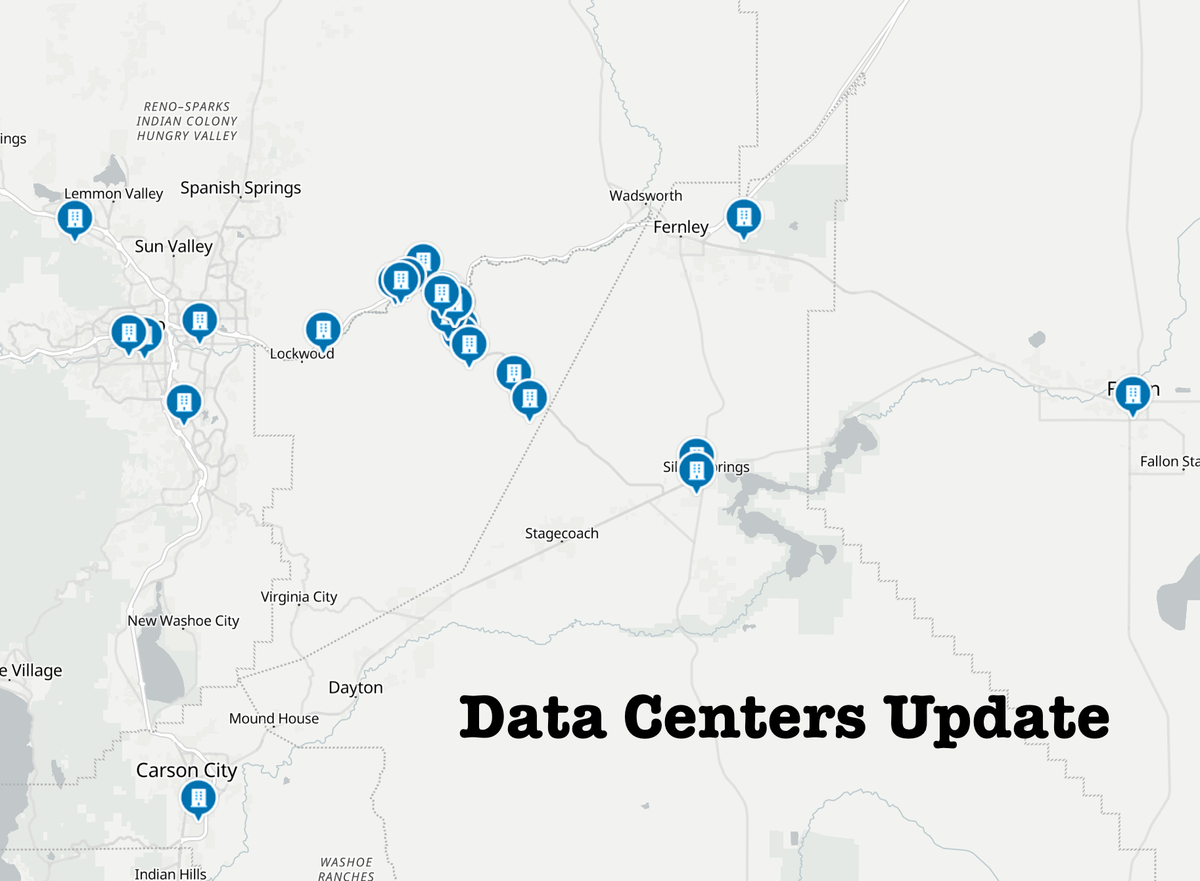
According to the data center map, there are about 29 data centers already operating in the Western Nevada regional area. Spanning several county jurisdictions, they are concentrated at the Tahoe Reno Industrial Center (TRIC) in Storey County, Reno-Sparks, Fernley (Lyon County), Fallon (Churchill County), Silver Springs (Lyon County) with one, so far, in Carson City (city-county combo).
County's control building permits in their jurisdictions and that complicates regional regulatory control. Whereas power companies and their grids and water aquifers can span several counties. For example, water allocations in one county may draw water from an adjacent county.
Western Nevada's Desert Research Institute (DRI) has created an in-depth study of the data center industry in our region and is definitely worth a visit for further education and study.
Key Points:
- Data centers consumed roughly 22% of Nevada's power capacity in 2024—a figure projected to rise to 35% by 2030.
- NV Energy estimates the energy demand for just 12 data center projects across the state will be 5,900 megawatts. This is about 2.8 times the capacity of Hoover Dam.
- Due to surging electricity and water usage, the Reno City Council placed a moratorium on new data centers within city limits (lasting until August 2027)
- Located in the nation's driest state, the industry is increasingly focusing on water-neutral operations, with some facilities utilizing high-efficiency cooling to navigate the state's severe climate.
- To meet this growing electricity demand, the power grid will require new generation sources and transmission infrastructure. This can take years to complete and requires considerable capital investment resulting in possible increased rates for electricity customers.
- The rapid power grid expansion is also likely to derail the state's ability to meet its goal of producing half its power from renewable sources by 2030. This is occurring as the Trump Administration is cancelling funding for renewable energy.
- NV Energy claims ending power supply to Lake Tahoe is not related to data centers.
Recent Media Discussion
- Nevada Is Falling Behind on Climate Goals. Data Centers Are to Blame.
- The ‘time-consuming’ permits dozens of data centers are skipping
- 5 local governments facing backlash over AI data centers
- How has your city or county regulated data centers? Here's the latest in Nevada.
- AI Data Centers Use Far More Water Than Most Tech Giants Report
- Northern Nevada a hot market for data center development
- OPINION: Data centers will not destroy Reno
- Northern Nevada counties watching closely as Humboldt weighs data center moratorium
- Nevada's largest county to consider data center regulations — but likely not a moratorium
- Data center boom in Northern Nevada sparks debate over water, power and policy
- NV Energy betting the house on data centers
FOX5 Investigates: Nevada data center boom strains energy, water, and land resources
A memo from Nevada’s Legislative Council Bureau says northern Nevada is poised to become the second largest data market in the world.
 Lisa Sturgis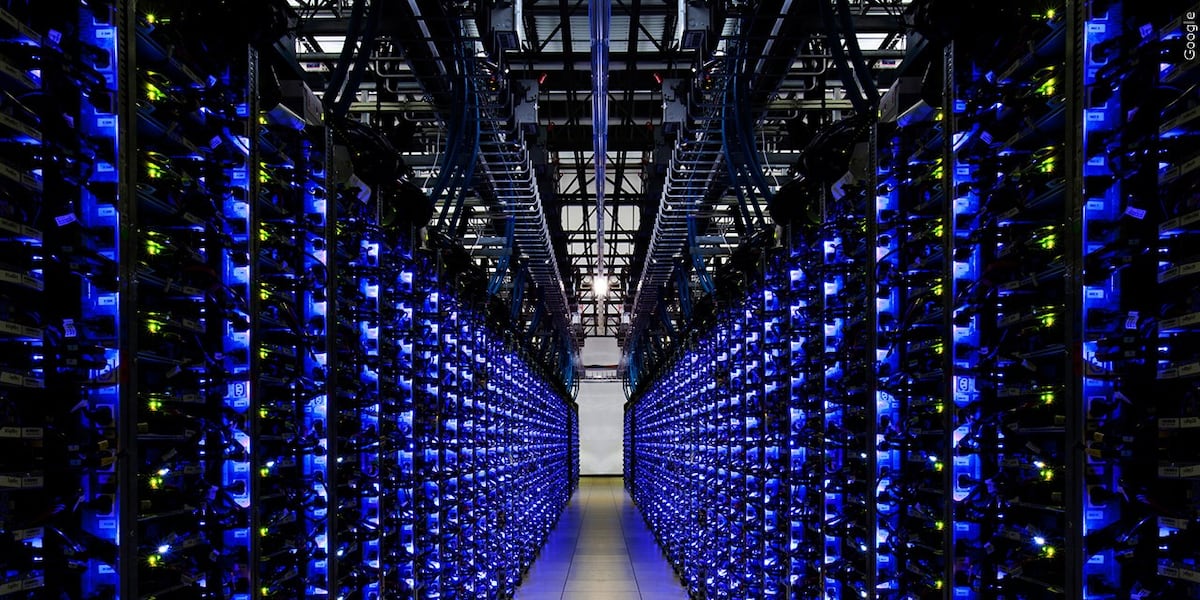
Citizen Discussion
A review of local Facebook, Nextdoor and opinion posts reveals a widespread concern over the energy and water use in Western Nevada. Many residents recognize Nevada is the driest state with limited domestic water resources. Local residential developments that have caused surrounding wells to go dry are remembered. Others note that Nevada Energy claims that cutting power to Liberty Energy customers at Lake Tahoe has long been planned in anticipation of limited power resources due to growth. This was before the new and dramatic increase in power demand by data centers.
Across the country, other communities are pushing back against the demands of the data center industry. Ohio is just one example.
Conclusion
While physically not specific to the South County area of our concern, regional nergy costs and water resources are definitely a concern to residential ratepayers and groundwater users. We will continue to monitor the situation.
Members Discussion